From Discovery to Impact: Introducing the Avicenna Journal of Clinical and Translational Medicine
Abstract
Bridging Discovery, Evidence, and Clinical Practice
The assessment of scientific progress typically involves measuring the discoveries made. The ultimate worth of such progress is measured in terms of the extent to which these discoveries further knowledge, facilitate better decision making in clinical practice and eventually contribute to human health. Although much progress has been made in the fields of molecular medicine, pharmacology, diagnostics, and therapeutics, bridging the gap between science and practice still poses many challenges [1]. The need for this bridging requires strong evidence, interdisciplinary collaboration and consideration of the barriers to implementing scientific knowledge in clinical practice.
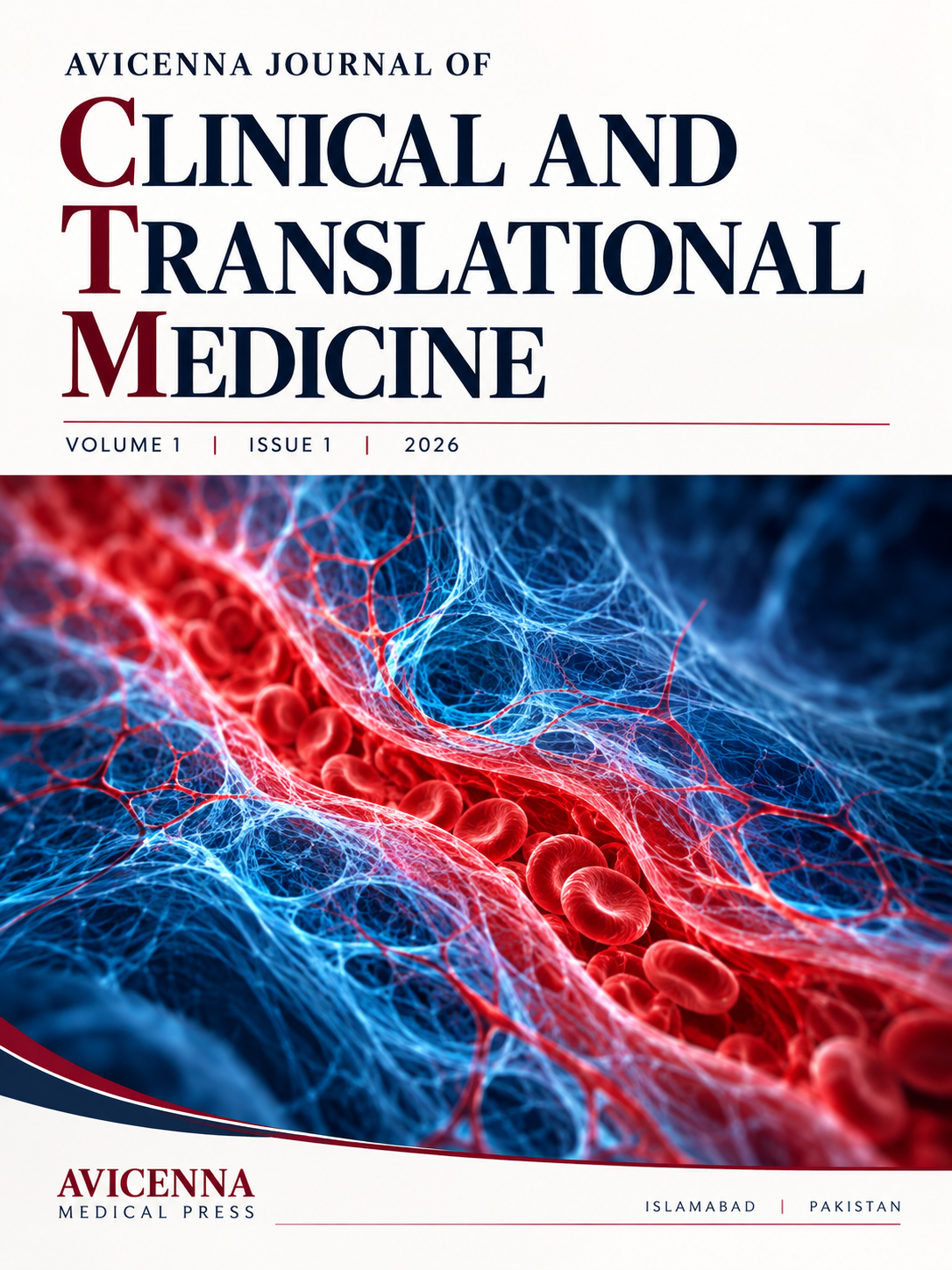
In this scientific landscape, we are happy to introduce the Avicenna Journal of Clinical and Translational Medicine (AJCTM). AJCTM is an international, peer-reviewed and open access scientific journal covering clinically oriented and translational research. There is a simple philosophy behind AJCTM: scientific knowledge is not enough; it has to be critically reviewed and developed into evidence.
Translational medicine goes beyond the usual process, starting from basic discoveries and ending up in clinical application. This discipline requires development and evaluation of diagnostic and treatment strategies, generation of robust evidence and its translation to patients from different backgrounds within various healthcare settings. Even interventions validated in strong clinical trials may experience problems of implementation due to heterogeneity in patients' background, resources available, clinical practice and other factors [2].
This journal intends to provide such platform in academic form. The scope of this journal includes topics related to clinical and translational medicine, disease mechanisms at the molecular and cellular levels, pharmacology and therapy, biomarkers, diagnostics, precision medicine, clinical trials, epidemiology, evidence-based medicine, and implementation science. In particular, there will be preference to researches solving important clinical questions, revealing the relationship between biology and patient outcomes, or providing information about healthcare improvement.
Our goal is not only in defining the wide scope of the journal but also in promoting certain research questions and evaluation criteria. We intend to emphasize scientific works that reveal disease mechanisms, improve diagnostics or therapy decision-making, critique clinical practices or identify obstacles of efficient healthcare implementation. In any case, the most important question will be whether the research contributes to generation of reliable evidence that will influence human health.
Scientific relevance cannot be considered as clinical applicability of the results. Fundamentally important researches, new methods, and even confirming or contradicting known facts represent an irreplaceable contribution to the scientific progress. Thus, AJCTM is open to any scientifically sound investigation on biomedical or clinical topic, including carefully designed negative, neutral or confirmatory works.
Modern development of scientific publishing opens unique possibilities for exchanging the knowledge but it creates serious concerns about scientific validity of researches. Poor methodology, poor statistics and insufficient reporting decrease confidence in the results [3]. In addition, avoidable methodological, statistical and reporting flaws significantly reduce the value of scientific investments [4].
For AJCTM, scientific integrity and rigor have priority over publication output and even over novelty. The significance of the research question posed, the appropriateness of the study design, methods, statistical analyses, reporting and conclusions reached should be taken into account by the editorial assessment process.
Creation of a Credible and Inclusive Scientific Platform
Current clinical issues require the work of biomedical scientists, clinicians, pharmacologists, epidemiologists, biostatisticians, and health system researchers. It is the objective of AJCTM to foster such interactions and to recognize that the different perspectives provided by experiments, randomized trials, observations, and real-world studies are complementary.
Equally important is geographical diversity in research because the research priorities and the health care needs differ between populations and health care systems. Studies conducted in low and middle income countries can yield valuable information about patterns of disease, limits in diagnosis, availability of therapy and barriers for the implementation of the interventions.
Scientific credibility of publications goes beyond the results of the study itself. Responsibility for the research, ethical oversight, transparency of reporting, conflict of interest disclosure and management, and peer review constitute the fundamentals of the credibility of the publication process. Guidelines on international recommendations and specific study reporting constitute an important framework for the authors, the reviewers, and the editors. AJCTM maintains its commitment to editorial independence, productive peer review, responsibility and balanced assessment of the evidence underlying each conclusion.
While open access publishing enhances the dissemination of science, it does not contribute to the credibility. The publication decisions should be based on the scientific merit and ethical considerations. Artificial intelligence is more frequently used in biomedical research and publication process, which brings new opportunities as well as new responsibilities. Such use of technology should be appropriately disclosed, accuracy and confidentiality should be considered, and human responsibility for the research and editorial decision making should be preserved.
A Commitment Beyond Publication
The launch of AJCTM marks the beginning of a scientific responsibility rather than the attainment of an institutional milestone. A journal earns its standing over time through the credibility of its editorial decisions, the reliability of its published evidence, and the confidence of the communities it serves.
Our ambition is not merely to create another publication outlet, but to develop a respected international platform where rigorous inquiry, clinical relevance, and responsible scholarship converge. We invite researchers, clinicians, educators, reviewers, and scholars across disciplines and geographical boundaries to contribute work that tests assumptions, addresses important clinical questions, and strengthens the evidence available to patients, practitioners, and health systems.
As AJCTM begins its journey, our guiding commitment is clear: to advance trustworthy scientific knowledge, connect discovery with clinical practice, and contribute meaningfully to better healthcare.
References
References
1. Woolf SH. The meaning of translational research and why it matters. JAMA. 2008;299(2):211–213. doi:10.1001/jama.2007.26.
2. Glasgow RE. Translating research to practice: lessons learned, areas for improvement, and future directions. Diabetes Care. 2003;26(8):2451–2456. doi:10.2337/diacare.26.8.2451.
3. Ioannidis JPA. Why most published research findings are false. PLoS Med. 2005;2(8):e124. doi:10.1371/journal.pmed.0020124.
4. Chalmers I, Glasziou P. Avoidable waste in the production and reporting of research evidence. Lancet. 2009;374(9683):86–89. doi:10.1016/S0140-6736(09)60329-9.
5. International Committee of Medical Journal Editors. Recommendations for the conduct, reporting, editing, and publication of scholarly work in medical journals. Updated January 2026. Available from: https://www.icmje.org/recommendations/.
6. Hopewell S, Chan AW, Collins GS, et al. CONSORT 2025 statement: updated guideline for reporting randomised trials. BMJ. 2025;389:e081123. doi:10.1136/bmj-2024-081123.
Downloads
Published
Issue
Section
License
Copyright (c) 2026 Guido Fumagalli (Author)

This work is licensed under a Creative Commons Attribution 4.0 International License.